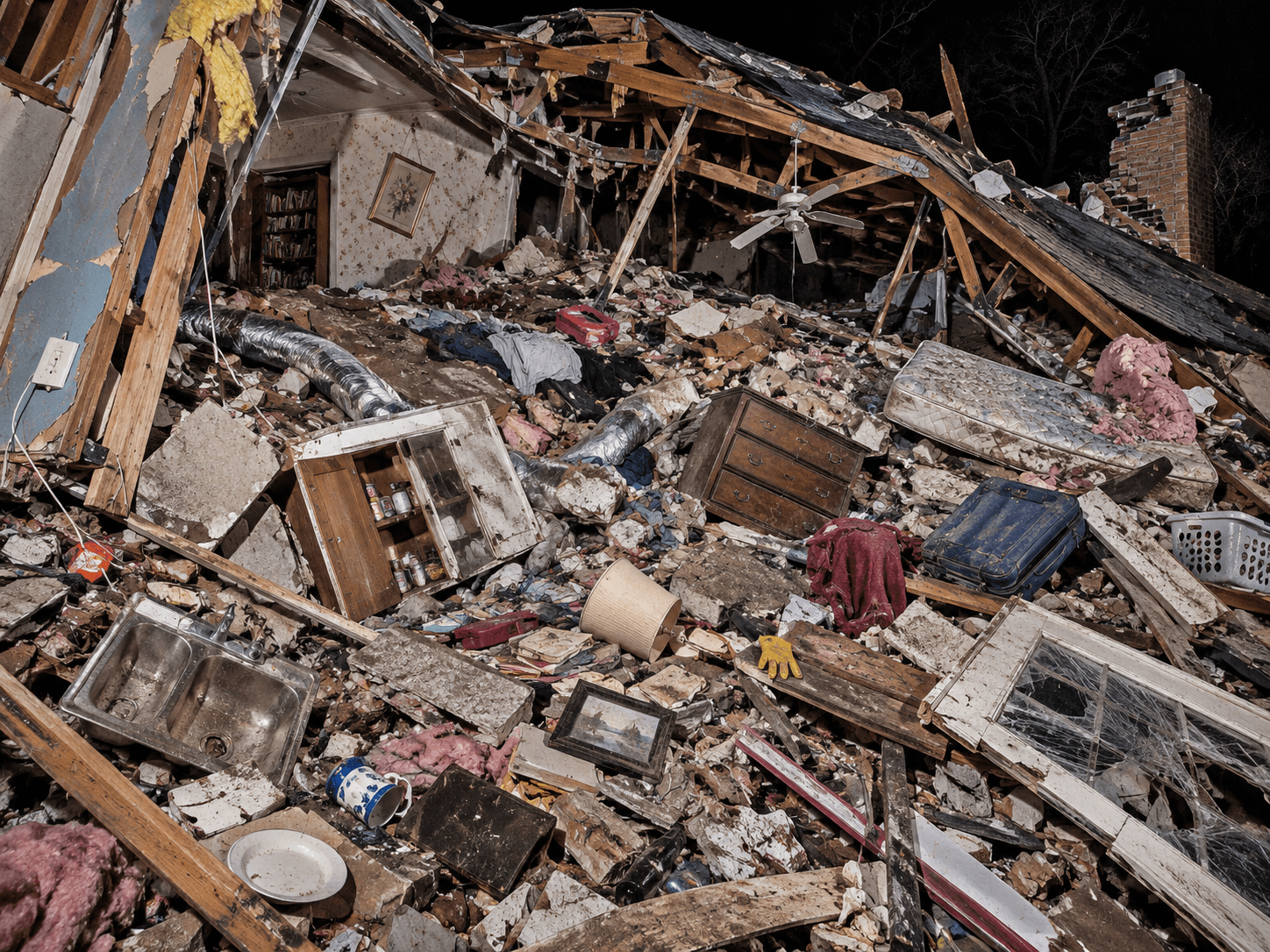
The devastating building collapse in Flatbush, Brooklyn, on November 11, 2026, has left New York City mourning the loss of eight lives, including six adults and two children. Eighteen others were injured, families were displaced, and residential and commercial property suffered catastrophic damage.
United Public Adjusters & Appraisers extends its deepest condolences to the victims’ families and everyone affected by this heartbreaking tragedy.
The collapse occurred at 1321 Flatbush Avenue, where a three-story building containing residential apartments and a ground-floor business fell into an adjacent excavation site at 2625 Bedford Avenue. The incident also damaged neighboring structures, raising urgent concerns about building stability, structural integrity, and property losses.
According to ABC7 New York and NBC New York, the NYC Department of Buildings has issued a stop-work order at the construction site as investigators work to determine what caused the collapse.
While the human toll is immeasurable, the disaster also highlights the complex challenges property owners face when buildings are destroyed or severely compromised. Understanding building collapse insurance claims can help affected owners protect their financial interests and begin the difficult recovery process.
Does Property Insurance Cover Building Collapse and Structural Damage?
Homeowners and commercial property insurance policies may cover certain types of sudden structural collapse, depending on the cause, policy language, endorsements, and exclusions.
Coverage is not automatic. Some policies provide limited collapse protection, while others may exclude damage resulting from faulty construction, earth movement, deterioration, or inadequate structural support.
Depending on the circumstances, potentially recoverable losses may include:
- Structural damage: Collapsed walls, compromised foundations, damaged floors, roofs, beams, and load-bearing components.
- Adjacent property damage: Cracked masonry, foundation movement, destabilized walls, and other damage to neighboring buildings.
- Personal property: Furniture, electronics, appliances, clothing, and other belongings damaged or destroyed.
- Commercial property: Damaged equipment, inventory, fixtures, and business improvements.
- Loss of use: Additional living expenses for qualifying displaced residents or business interruption losses for covered commercial operations.
- Emergency stabilization: Eligible expenses for temporary shoring, protective measures, debris removal, and other necessary work, subject to policy terms.
When neighboring construction or excavation is involved, multiple insurance policies and potentially responsible parties may complicate the recovery process. Determining the cause of damage is essential to establishing which coverage provisions may apply.
How Should Brooklyn Property Owners Document Structural Damage?
Following a building collapse or nearby construction incident, safety must take priority. Property owners should never enter a damaged or evacuated structure until authorized officials determine that access is safe.
Once permitted, owners should begin documenting their losses and preserving evidence that may support their insurance claims.
1. Report the Damage Promptly
Notify your insurance carrier as soon as reasonably possible. Provide the date, location, and known circumstances of the incident, and retain copies of all communications.
2. Document Visible and Hidden Damage
Photograph and record cracked foundations, separated walls, damaged ceilings, shifting floors, and other structural concerns. Preserve earlier photographs, inspection reports, maintenance records, and correspondence that may help establish the building’s pre-loss condition.
3. Obtain Independent Professional Assessments
Licensed structural engineers and qualified building professionals can help evaluate structural stability, identify concealed damage, and determine whether repairs, reinforcement, or reconstruction may be necessary.
4. Inventory Damaged Property
Prepare a detailed inventory of damaged contents, equipment, inventory, and improvements. Include purchase records, replacement estimates, photographs, and other available documentation.
5. Preserve Financial Records
Maintain records of emergency repairs, temporary accommodations, relocation expenses, lost rental income, and interrupted business operations. These expenses may be recoverable when applicable coverage is available.
Thorough documentation is especially important for building collapse insurance claims, where the full extent of structural damage may not be immediately apparent.
Understanding Insurance Company Inspections and Claim Evaluations
After a structural loss, the insurance company typically assigns an adjuster to investigate the incident, inspect the property, and evaluate the claimed damages.
The insurer may also retain engineers or other specialists to assess the cause and extent of the structural failure.
However, an insurance company’s initial assessment may not identify every damaged component or account for the complete cost of restoration.
For Brooklyn property owners, potential points of disagreement may include whether foundations require replacement, whether adjoining walls remain structurally sound, the extent of concealed damage, and whether reconstruction must satisfy current building codes.
Owners should also review applicable policy provisions addressing replacement cost, actual cash value, ordinance or law coverage, deductibles, and coverage limits.
A thorough, independently supported damage assessment can help property owners challenge incomplete estimates and pursue compensation consistent with their policy.
How Can a Public Adjuster Help After a Building Collapse?
Major structural losses are among the most complicated property insurance claims. When a building is partially or completely destroyed, owners may face competing engineering assessments, extensive repair estimates, coverage disputes, and prolonged negotiations.
A licensed public adjuster represents the policyholder’s interests rather than the insurance company’s.
United Public Adjusters & Appraisers assists residential and commercial property owners by:
- Reviewing insurance policies to identify potentially applicable coverage.
- Documenting structural damage and associated property losses.
- Coordinating with qualified specialists to evaluate repair and replacement requirements.
- Preparing detailed estimates and supporting claim documentation.
- Identifying eligible additional living expenses, business interruption losses, and other covered costs.
- Negotiating with insurance carriers to pursue fair settlements under the policy.
For properties affected by excavation, foundation instability, or neighboring construction, establishing the extent of damage and its relationship to the incident can be particularly important.
Protecting Brooklyn Property Owners Following Structural Disasters
The Flatbush tragedy is a sobering reminder that structural failures can have devastating consequences extending far beyond the property where the initial incident occurs.
Throughout Brooklyn, including Flatbush, Midwood, Crown Heights, Bedford-Stuyvesant, Park Slope, and surrounding neighborhoods, aging buildings, adjoining foundations, and ongoing construction activity can create complicated property damage scenarios.
Property owners dealing with structural instability, partial collapse, or damage from nearby construction should not assume that an insurer’s initial evaluation represents the full extent of their covered losses.
United Public Adjusters & Appraisers has extensive experience representing New York property owners in complex residential and commercial insurance claims. With nearly $1 billion in settlements recovered, our team understands the importance of meticulous documentation, comprehensive damage evaluations, and informed negotiations.
If your Brooklyn property has sustained significant structural damage, contact United Public Adjusters & Appraisers to discuss your insurance claim and learn how our experienced public adjusters can help protect your interests.
MY FREE CONSULTATION
"*" indicates required fields